The Power and Wisdom of Preparation in a Changing Climate
There is a noticeable shift happening globally, and it would be unwise to ignore it.
From rising living costs to ongoing conversations around energy security, food supply, and economic pressure, we are living in a time where systems feel less predictable than they once did. This isn’t about alarmism, and it’s not about assuming the worst. It’s about acknowledging what is already in front of us and responding with wisdom.
Across the UK, official guidance now encourages households to be prepared to sustain themselves for a short period in the event of disruption, whether that be power outages, severe weather, or interruptions to supply chains. This alone tells us something important: preparation is no longer a niche concern, it is becoming a shared responsibility.
What we are seeing is not a collapse, but a tightening. The margin for error is smaller. Delays are more likely. Costs are higher. Systems are under more pressure. And in moments like this, the difference between panic and stability often comes down to one thing, whether or not you prepared in advance.
Preparation, in this context, is not extreme. It is practical.
It begins at home, with simple awareness. If daily life were interrupted for even a few days, would you have what you need to function without stress? Government recommendations suggest keeping a small supply of non-perishable food and bottled water, enough to remain comfortable if access is temporarily limited. This is not about excess, but about removing immediate dependence on constant availability.
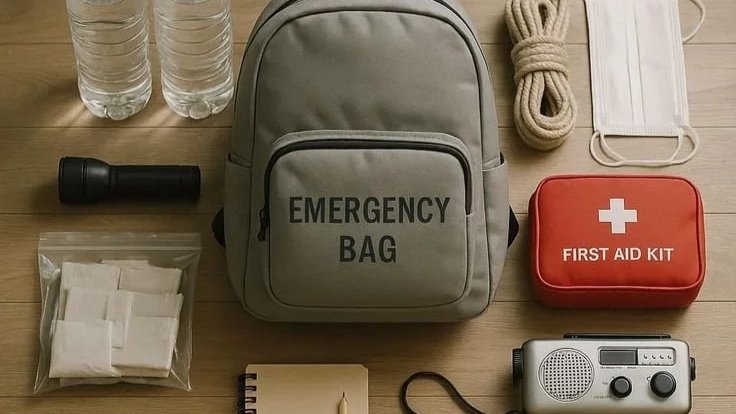
Energy is another area that cannot be overlooked. Our reliance on electricity is significant, yet many households are not equipped for even a short disruption. Having a torch, a charged power bank, and access to reliable updates through a battery-powered or wind-up radio are small but necessary precautions. These are the kinds of items that are often overlooked until they are urgently needed.
Health and personal care follow the same principle. Ensuring you have access to basic medication, a first aid kit, and essential hygiene products allows you to maintain normalcy in situations where access to shops or services may be delayed. These are not dramatic measures, they are foundational ones.
Beyond the physical, preparation also extends into how we approach work and financial stability. The current climate has made one thing increasingly clear: relying on a single stream of income carries more risk than it once did. Industries are shifting, and economic pressure is affecting both businesses and individuals. Preparing in this area may look like building savings gradually, diversifying income where possible, or developing skills that allow for greater flexibility. These are longer-term forms of preparation, but they are just as important.
Another practical step encouraged in official guidance is the idea of a ready-to-go essentials bag. This includes important documents, basic supplies, and key items that would allow you to leave your home quickly if necessary. While this may not be something you ever need to use, having it prepared removes unnecessary stress in urgent situations.
It is also important to recognise that preparation is not solely individual. In times of disruption, community becomes increasingly valuable. Knowing your neighbours, checking in on others, and being willing to share information or resources can make a significant difference. Preparedness is stronger when it is collective.
The key point in all of this is not to create fear, but to encourage awareness followed by action. The current climate is not as stable as it once was, and ignoring that does not make it untrue. At the same time, overreacting is not the solution either. The balance is found in measured, informed preparation.
Taking small, intentional steps now, while systems are still functioning, places you in a far stronger position than waiting until those steps become urgent.
Preparation is not about expecting something to go wrong. It is about recognising that if something does, you will not be starting from zero.
And in a time like this, that is not just wise, it is necessary.